Wisdom teeth (also called third molars) are the last teeth to develop, usually appearing between the ages of 15- 25. While some people have no issues with them, many experience problems because there often isn't enough space in the mouth for these teeth to fully erupt and function properly.
Wisdom teeth sit at the very back of your mouth - two on the top and two on the bottom. In an ideal situation, they grow in straight, align with your other teeth, and are easy to clean. However, this doesn't always happen.
1. Impaction
A wisdom tooth is impacted when it cannot fully erupt into the mouth. It may:
Impacted teeth can trap food and bacteria, increasing the risk of infection
2. Crowding
Wisdom teeth can push up against neighbouring teeth, potentially contributing to crowding or discomfort.
3. Tooth Decay & Gum Disease
Because wisdom teeth are hard to reach, wisdom teeth are more prone to cavities and gum inflammation.
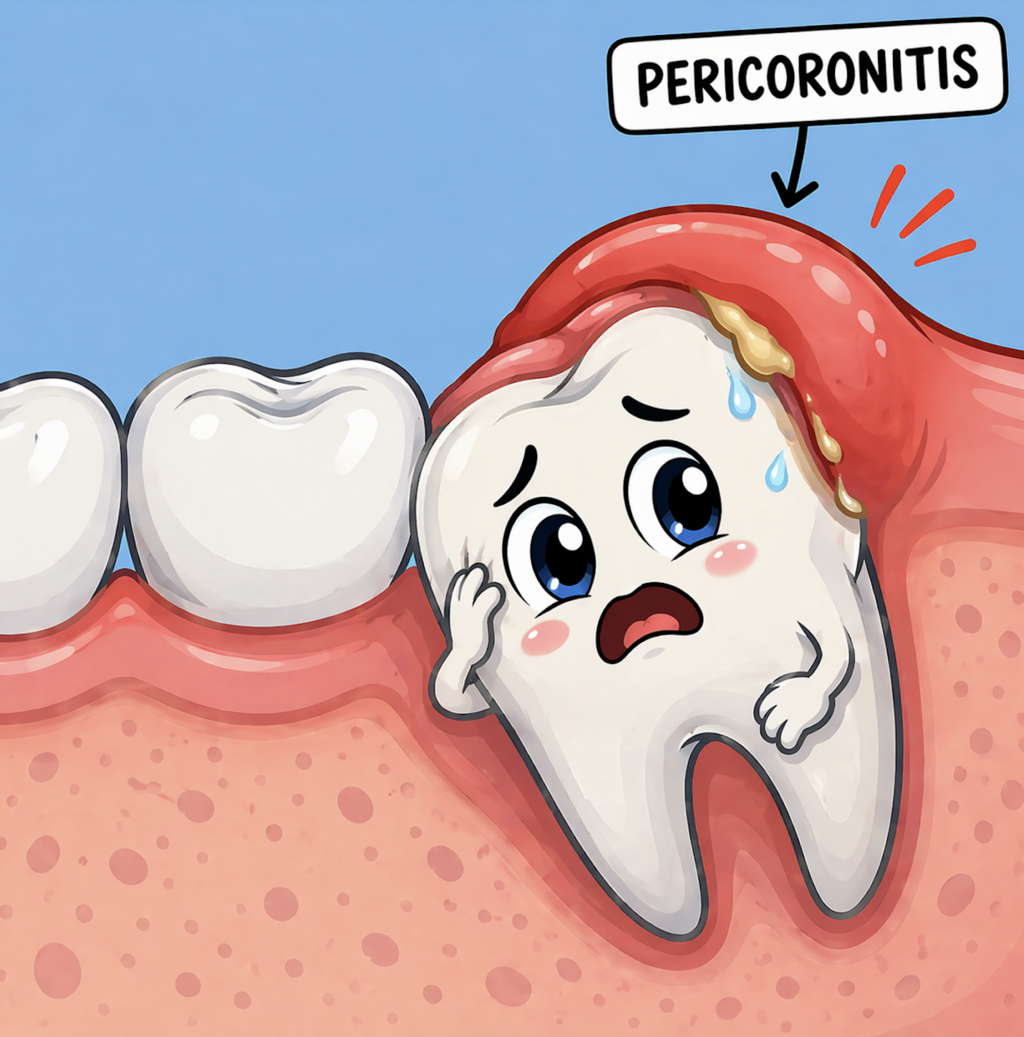
Pericoronitis is a common condition associated with a partially erupted wisdom tooth. It occurs when the gum tissue around the tooth becomes inflamed or infected, often due to bacteria and food getting trapped uner a flap of gum (called an operculum).
Signs and symptoms:
If the infection spreads, you may also feel unwell or develop sweeling under the jaw - this requires urgent attention.
Mild Cases
Moderate Cases
Severe Cases
Not always.
Your dentist will assess:
Removal is often recommended if: