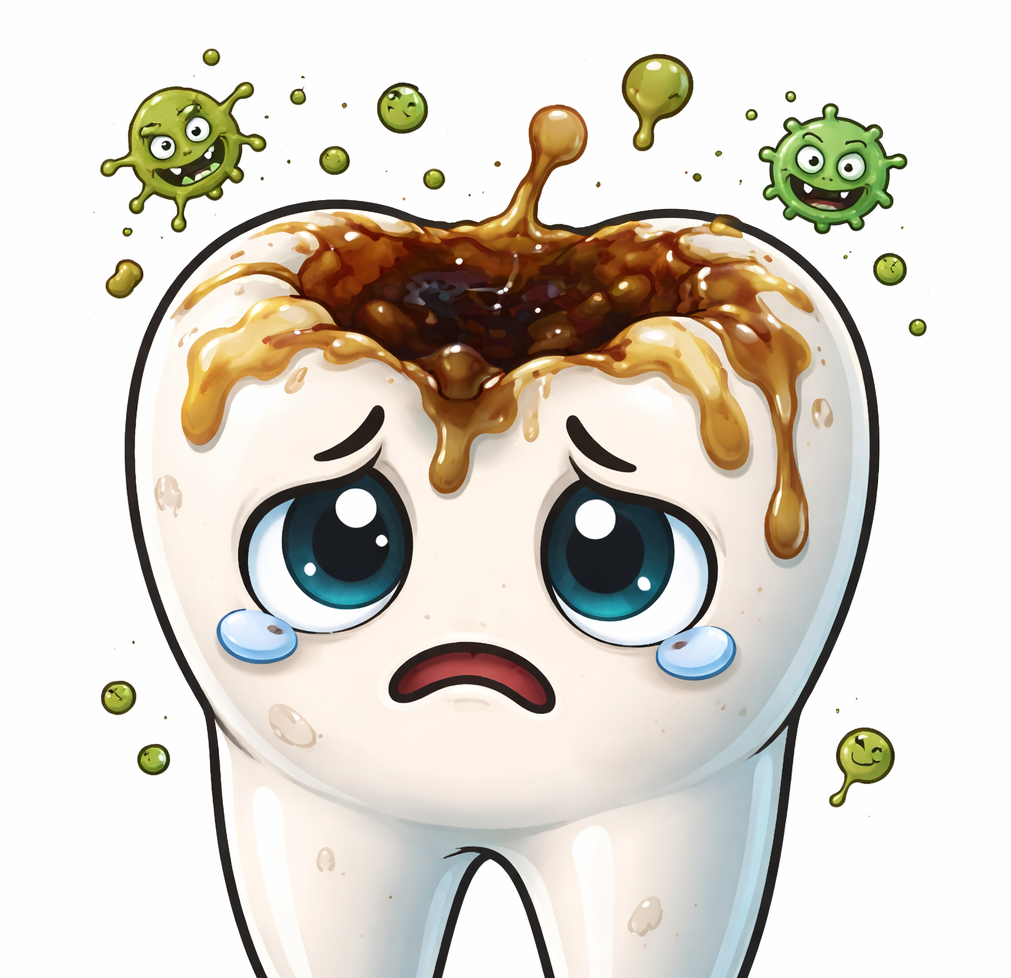
What is Tooth Decay?

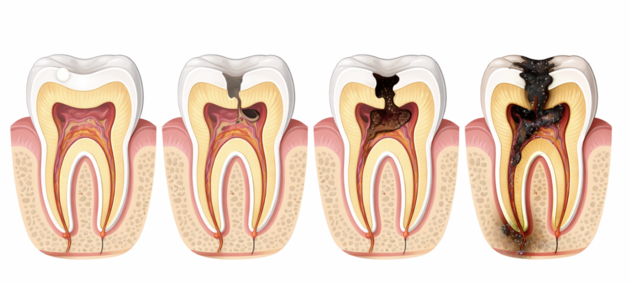
Tooth decay is a disease process where acids produced by plaque bacteria dissolve the outer layer of the tooth (enamel). If not treated, decay can progress deeper into the dentine and eventually reach the pulp (nerve), causing pain and infection.


Tooth decay begins when plaque bacteria metabolise sugars and release acids that demineralise enamel, leading to cavity formation over time.


Similarly, tooth decay can be described as a dynamic process of demineralisation and remineralisation, where repeated acid attacks tip the balance toward permanent tooth damage.

Tooth decay doesn't happen overnight. It progresses in stages:

  1. Plaque forms on teeth - After eating, bacteria combine with food particles and saliva to form plaque — a sticky film on teeth.
  2. Sugar feeds bacteria - When sugars and refined carbohydrates are consumed, bacteria use them as fuel.
  3. Acid is produced - These bacteria produce acids that lower the pH in the mouth
  4. Enamel begins to weaken - The acid dissolves minerals from enamel (demineralisation)
  5. A cavity forms - Repeated acid attacks create a hole in the tooth
  6. Decay spreads deeper - If untreated, the decay reaches the dentine and eventually the nerve.


This process is well supported in dental literature and described by many major oral health care brands including Oral B and Colgate, which emphasises that frequency of sugar exposure is more harmful than the total amount consumed.
Every time you eat or drink something sugary, your mouth goes through an acid attack that lasts around 20-10 minutes. If you snack frequently your teeth are exposed to repeated acid attacks, the mouth doesn't have enough time to recover and enamel stays in a weakened state for longer.


The Stephen Curve (Simplified)

  • Mouth pH drops quickly (becomes acidic)
  • Enamel begins to lose minerals (such as fluoride, calcium and phosphate)
  • Saliva slowly neutralises the acid and repairs enamel
  • If you snack again before recovery:
    • The pH drops again
    • Repair doesn't fully occur
    • Damage accumulates over time

Early tooth decay often has no symptoms, which is why regular dental check-ups are important. As decay progresses, you may notice:

  • White or brown spots on teeth
  • Sensitivity to cold, sweet, or hot foods
  • Pain when biting
  • Food getting stuck in teeth
  • Visible holes or pits
  • Toothache (late stage)
  • Swelling or infection (advanced stage)

Some patients are more prone to tooth decay:

  • Children and teenagers
  • Frequent snackers
  • Patients with dry mouth
  • Orthodontic patients (braces or aligners)
  • Patients with gum recession
  • High sugar drink consumption
  • Poor oral hygiene
  • Previous history of decay

Untreated decay can lead to larger cavities and result in:

  • Toothache
  • Infection
  • Abscess
  • Root canal treatment
  • Tooth fracture
  • Tooth loss

The good news is that tooth decay is largely preventable.

  • Twice daily brushing
  • Cleaning in between teeth daily
  • Limit frequency of intake of sugary foods and drinks
  • Drink water after meals
  • Regular dental check-ups
  • Professional fluoride treatment