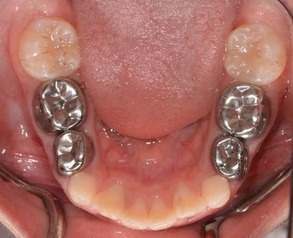
A Hall crown is a minimally invasive way of treating tooth decay in baby (primary) molars using a stainless steel crown. Unlike traditional dental treatments, the Hall Technique involves placing a crown over the tooth without removing the decay, drilling, or using injections
Instead, the decay is sealed inside the tooth. This cuts off the bacteria’s food supply, helping to stop the decay from progressing. This approach reflects modern, evidence-based dentistry and aligns with preventive philosophies supported by organisations such as Oral Health Victoria, Oral-B, and Colgate.
Hall crowns are typically recommended when:
It is important that the tooth is carefully assessed—this technique is only suitable when the nerve (pulp) is still healthy.
Rather than removing decay, the Hall Technique “seals” it under a stainless steel crown. Without access to sugars and bacteria from the mouth, the decay process slows or stops.
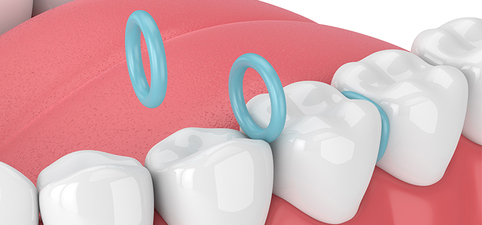
1. Placement of Separators
Small elastic bands may be placed between teeth for a few days to create space.
2. Crown Placement
A preformed stainless stell crown is selected, the crown is gently pushed over the tooth and sealed with dental cement.
No drilling, no injections and usually completed quickly.
No needles or drilling, making it ideal for anxious children.
Studies show excellent long-term outcomes, often comparable or better than fillings.
The technique is widely accepted by children and parents due to its simplicity and reduced discomfort.
The crown protects the tooth until it naturally falls out.
Often quicker than traditional treatments, reducing time in the dental chair.
In some cases, separators may cause mild soreness before crown placement.