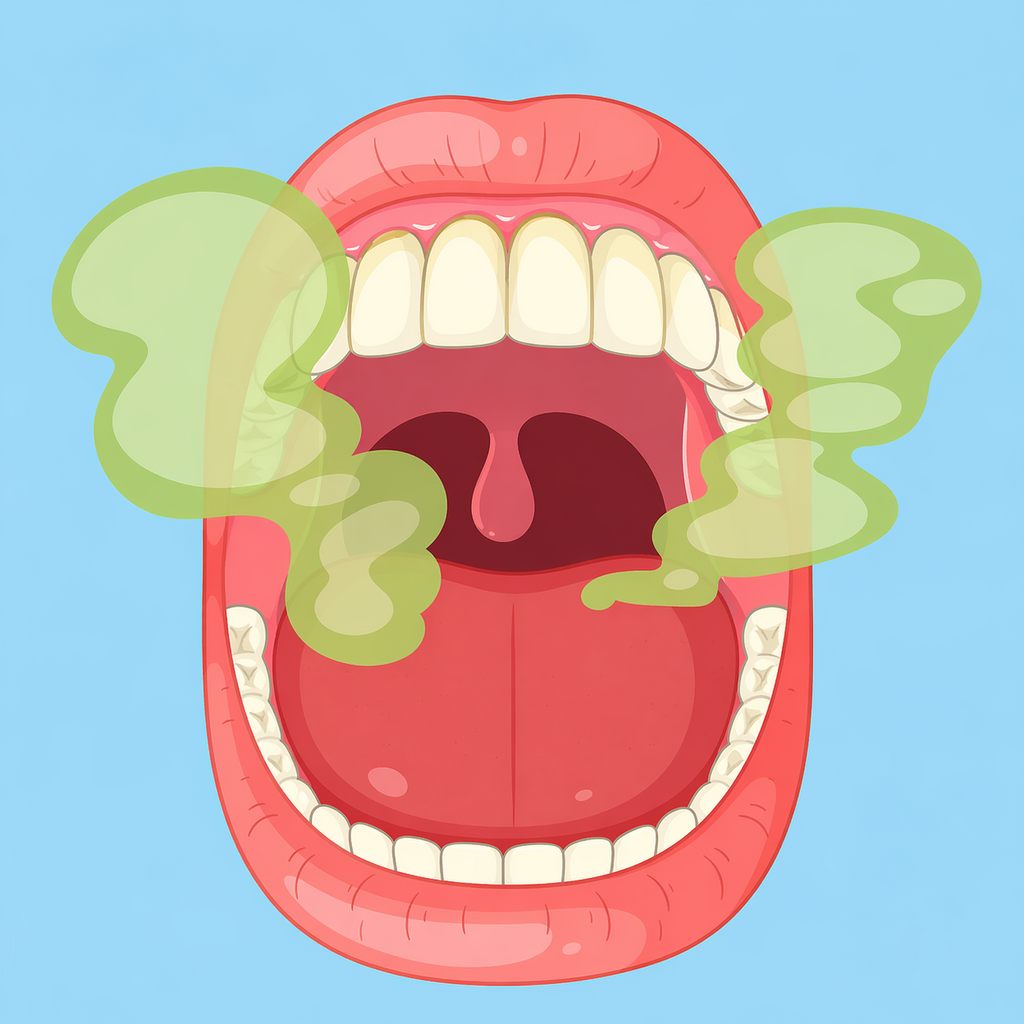
Halitosis, more commonly known as bad breath, is a very common condition that can affect people of all ages. Occasional bad breath is normal, especially after eating strongly flavoured foods such as garlic or onions, but persistent bad breath may indicate an underlying oral health problem.
For many people, halitosis can affect confidence, social interactions, and quality of life. Fortunately, in most cases, bad breath can be improved with appropriate dental care and oral hygiene habits.
Bad breath usually develops when bacteria build up in the mouth. These bacteria break down food particles and release unpleasant-smelling sulphur compounds.
Common causes include:
If plaque and food debris are not removed effectively through brushing and flossing, bacteria accumulate around the teeth, gums, and tongue.
This can lead to:
The tongue contains many tiny grooves where bacteria, food particles, and dead cells can collect. A coated tongue is one of the most common causes of halitosis.
Periodontal (gum) disease can create deep pockets around the teeth where bacteria thrive. This may cause:
Saliva helps naturally clean the mouth and wash away bacteria. When saliva production decreases, bad breath can worsen.
Dry mouth may occur due to:
Untreated dental issues such as:
can all contribute to unpleasant breath.
Sometimes people are unaware they have bad breath, as they become accustomed to the smell over time.
Possible signs include:
Use fluoride toothpaste and brush for two minutes twice each day.
Pay particular attention to:
Floss or interdental brushes help remove plaque and trapped food between teeth where toothbrushes cannot reach.
Tongue cleaning can significantly reduce bacteria responsible for odour. You can use a tongue scraper or a soft toothbrush.
Drinking water regularly helps maintain saliva flow and reduce dry mouth.
Routine examinations and cleans help identify:
early before they worsen.
In most cases, yes. Prevention focuses on maintaining good oral hygiene and keeping the mouth healthy.
Healthy habits include: