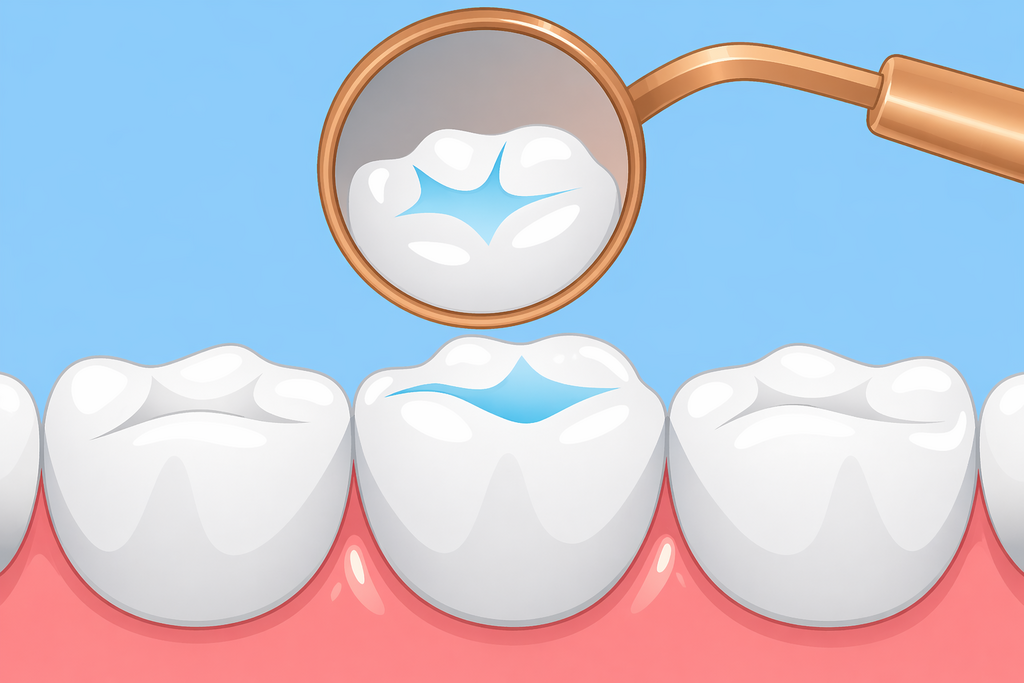
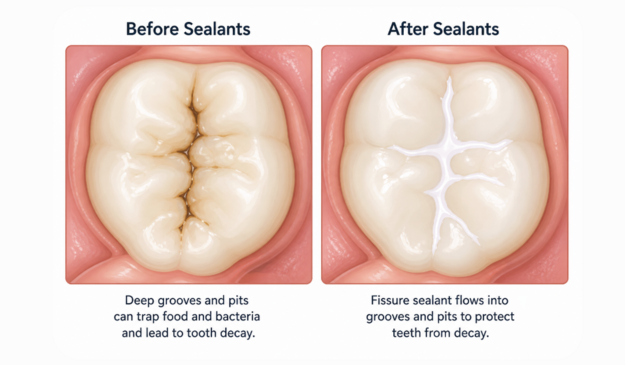
Fissure sealants are thin, protective coatings applied to the chewing surfaces of back teeth (molars and premolars). These teeth naturally have deep grooves (fissures) where food and bacteria can easily become trapped.
Sealants work by sealing these grooves, creating a smoother surface that is easier to clean and less likely to develop decay.
The biting surfaces of molars are the most common site for tooth decay in children and teenagers. Even with good brushing, toothbrush bristles often cannot reach deep fissures.
Sealants provide a physical barrier that:
According to preventive dentistry principles, sealants are one of the most effective ways to protect high-risk teeth early.
Sealants are most commonly recommended for:
Oral Health Victoria emphasises early prevention—placing sealants soon after teeth erupt provides the greatest benefit.
Applying fissure sealants is quick, painless, and non-invasive. No drilling or injections are required.
Step-by-step process:
The entire process usually takes just a few minutes per tooth.
Fissure sealants protect against tooth decay