A dental implant is a replacement for a missing tooth. It is usually made from titanium and is surgically placed into the jawbone.
Once the implant has integrated with the bone, it can support a replacement tooth such as a crown, bridge or denture.
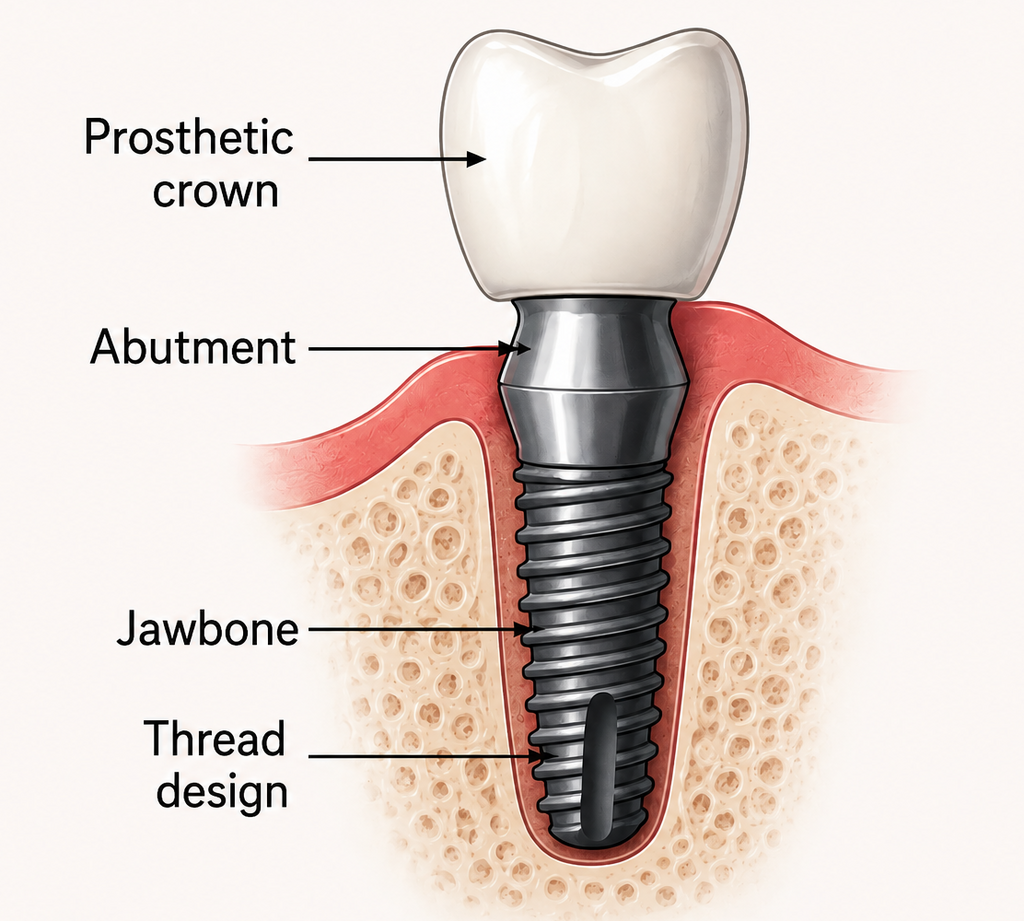
Parts of an implant:
🦷 Implant - The part placed into the jawbone.
🔩 Abutment - Connects the implant to the replacement tooth.
👑 Crown - The visible tooth that sits above the gum.
Together, these recreate the function and appearance of a natural tooth.
Getting an implant usually involves several stages:
1. Assessment
Your dentist assesses your teeth, gums, bite and general oral health. X-rays and sometimes a 3D scan are required.
2. Implant placement
The implant is surgically placed into the jawbone.
3. Healing
The bone gradually integrates with the implant — a process called osseointegration.
4. Restoration
Once healed (about 3 months after implant placement), an abutment and crown are attached.
⏳ The entire process can take several months, depending on your individual situation
✅ Replace a missing tooth without preparing neighbouring teeth
✅ Help restore chewing function
✅ Provide a fixed replacement
✅ Look and feel similar to natural teeth
✅ Help preserve the jawbone around the implant
But implants aren't always the best option for everyone.
You still need to:
Implants can develop problems such as peri-implant mucositis and peri-implantitis if plaque isn't adequately controlled.
Not everyone is automatically a suitable candidate, and sometimes alternatives such as bridges or dentures may be more appropriate.
The most important thing? Get an individual assessment rather than relying on what worked for someone else.