A root canal treatment (also called endodontic treatment) is a procedure used to save a tooth that is infected or inflammed on the inside.
Inside every tooth is a soft tissue called the dental pulp, which contains nerves and blood vessels. When this pulp becomes infected or inflamed, it can cause pain and swelling. A root canal removes the infected tissue, cleans the inside of the tooth, and seals it to prevent further problems.
You may need a root canal if the pulp becomes inflamed or infected due to:
Step 1: Numbing the tooth
Local anaesthetic is used to ensure you are comfortable and pain-free during the procedure
Step 2: Cleaning the Infection
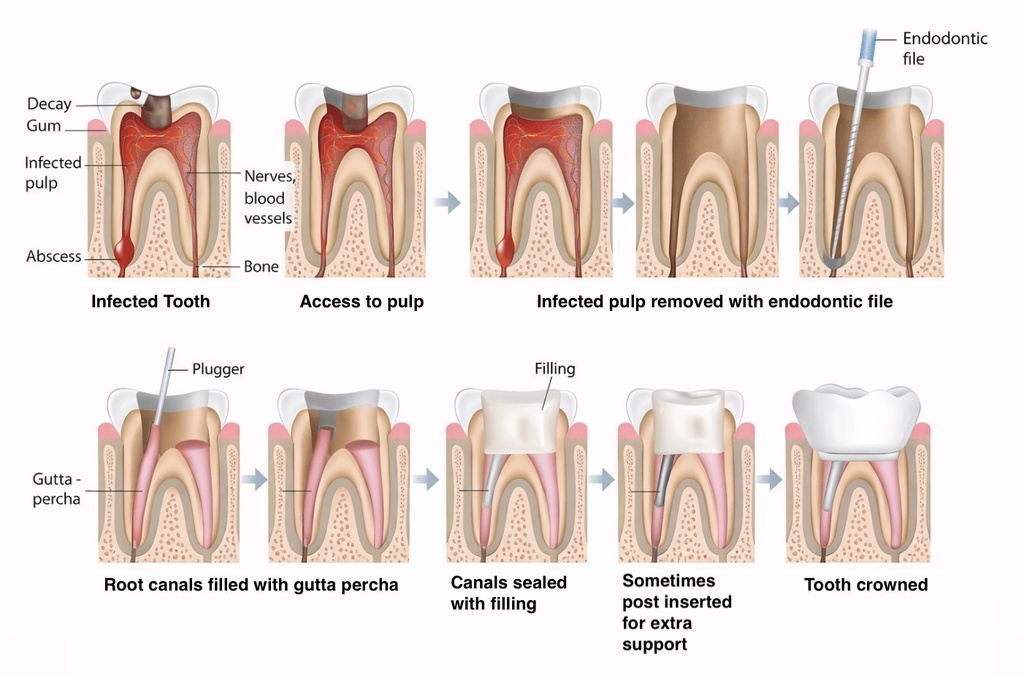
A small opening is made in the tooth, and the infected pulp is carefully removed. The inside of the root canals are then cleaned and disinfected.
Step 3: Shaping and Filling
The canals are shaped and filled with a special material to seal them and prevent infection.
Step 4: Restoring the Tooth
After a root canal, the tooth is usually restored with a filling or crown to protect it and restore strength.
IMPORTANT - The restoration of a root canal treated tooth is important as it creates a seal so that bacteria cannot re-enter the root canal system. It is important that this seal remain intact or the tooth may become reinfected and result in the loss of the tooth.
This is one of the most common concerns.
Modern root canal treatment is similar to having a filling. With effective anaesthesia and gentle techniques, most patients feel no pain during the procedure. You may experience mild soreness afterwards, which usually settles within a few days and can be managed with over-the-counter pain relief.
Root canal treatment is highly successful, with studies showing success rates often above 85 - 95% when properly restored and maintained. The success rate of a root canal however, reduces when the tooth is symptomatic or is associated with a pathology (abscess).
When successful and with good care, a root canal treated tooth can last decades.
The main alternative is tooth extraction. After removal, the tooth can be replaced with:
However, saving your natural tooth is usually the best option when possible, as it maintains function and bone support